'%3ECASH%3C/text%3E%3C/svg%3E)










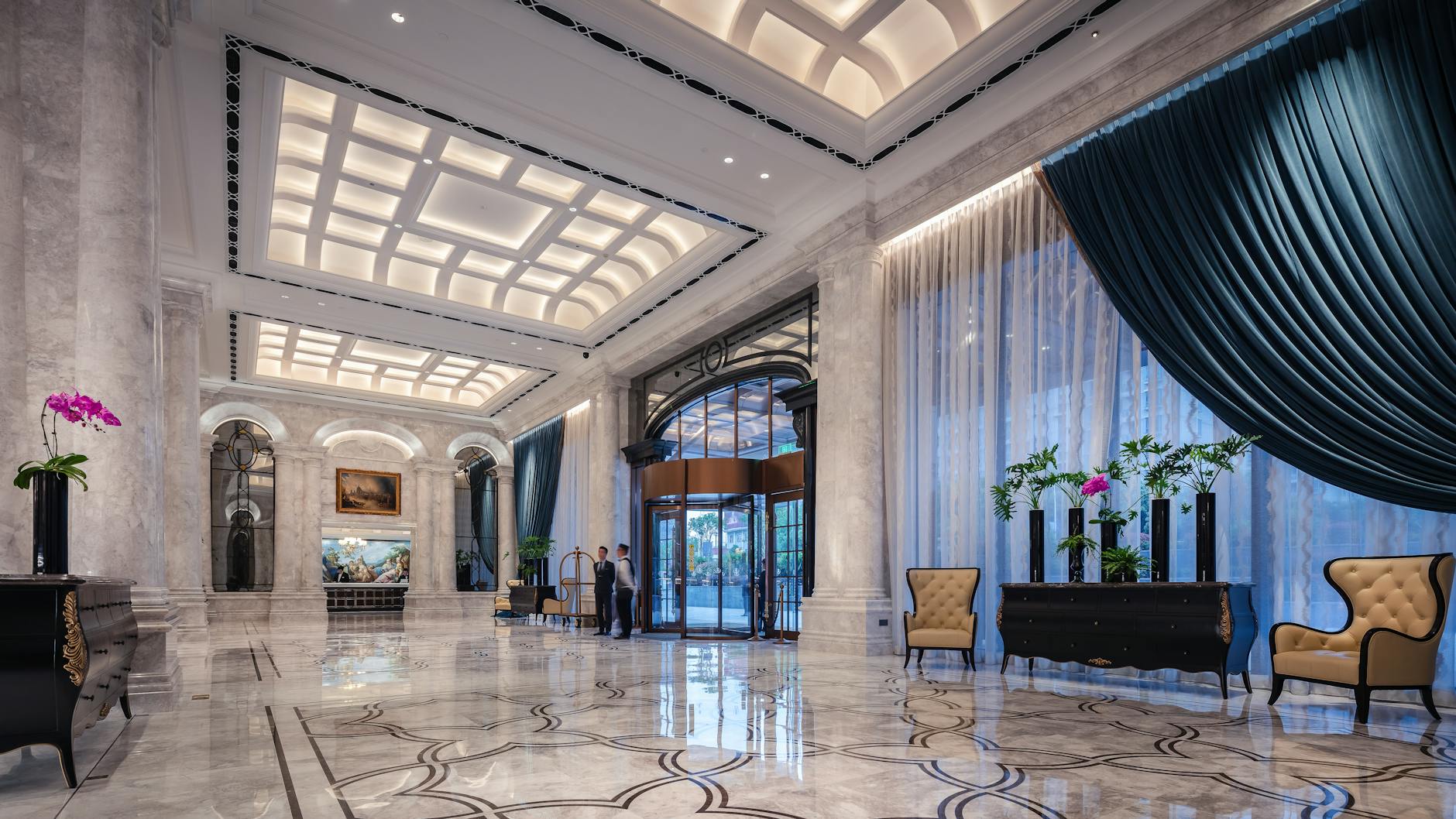
Hotel upgrades are allocation decisions — not random gifts, not arbitrary management discretion, and not primarily the reward of the longest-staying or highest-spending guest. They are the result of a front desk manager distributing a limited inventory of superior rooms among a set of arriving guests, based on a predictable hierarchy of signals that indicate relative value to the property. Understanding that hierarchy and positioning yourself correctly within it is the entirety of the upgrade playbook. The guests who receive suite upgrades consistently are not the wealthiest — they are the guests who make the upgrade decision easy for the person making it.
Status: The Most Reliable Lever

Hotel loyalty program status is the most reliable driver of consistent upgrades because it converts a discretionary decision into a partially contractual one. The programs with the most valuable stated upgrade benefits, based on published program terms:
Hyatt World of Hyatt Globalist (60 qualifying nights annually): Provides confirmed suite upgrades at check-in, subject to availability, for stays of up to seven consecutive nights. This is a stated benefit of the status tier — not a courtesy — which means the front desk is allocating against a specific commitment rather than exercising discretion. Hyatt's program consistently ranks among the most valuable in the industry for this reason.
Marriott Bonvoy Titanium Elite (75 qualifying nights annually): Provides Suite Night Award certificates — a separate benefit from standard upgrades — that can be requested in advance for specific reservation dates, removing the upgrade allocation from check-in day discretion entirely. Members receive five Suite Night Awards upon achieving Titanium status and earn additional awards through continued stays.
American Express Fine Hotels & Resorts (available to Platinum and Centurion cardholders): Provides a confirmed room category upgrade at check-in, subject to availability, at approximately 1,600 properties globally — alongside noon check-in, 4pm late check-out, daily breakfast for two, and a $100 (or equivalent) property credit. The program converts what is normally a discretionary hotel decision into a committed benefit, and the combination of upgrades and breakfast for two often represents $100–$300 in value per night above the room rate.
Booking Direct: Why It Matters More Than Most Guests Realise
Hotels pay online travel agencies (OTAs) — Expedia, Booking.com, Hotels.com — commission rates of 15–25 percent of the gross room rate, depending on the OTA and the hotel's contract terms. This is not a trivial cost: on a $400 room, the commission alone is $60–$100. A direct booking generates the same revenue to the hotel at zero commission cost, producing a meaningfully higher profit per occupied room. The hotel's revenue management and property management systems track booking source, and properties consistently prioritise direct bookings for upgrade consideration, for two reasons: the margin on the booking is higher (making the guest more economically valuable), and direct bookings can be linked to the guest's loyalty profile, allowing the property to recognise the guest's stay history and status before arrival. OTA bookings often cannot be linked to loyalty profiles at the property level, making the guest invisible in the system regardless of their actual status.
The Pre-Arrival Email: Your Most Underused Tool
The overwhelming majority of hotel guests send nothing to the property before arrival. A brief, specific email to the guest relations or concierge team — not the general reservations line — sent 48–72 hours before check-in consistently produces results that cold-arrival guests do not achieve. The email should: note any occasion if there is one (anniversary, significant birthday, celebratory trip); request a specific room preference if you have one (high floor, away from elevator, corner room, garden view rather than parking view); mention your loyalty program status and member number; and express genuine enthusiasm for the specific property.
The key is tone. A request framed as an expression of appreciation for whatever might be possible — rather than a statement of expectation or a demand — reaches a guest relations team member whose professional satisfaction comes from making guests happy. They have both the authority and the practical ability to act on the request in most cases. The guest who sends a thoughtful note 48 hours before arrival is remembered at the 6pm upgrade allocation meeting. The guest who says nothing until arrival and then asks loudly at the front desk is not.
Timing Your Arrival
Upgrade allocation at most properties happens twice: during the pre-arrival preparation the evening before (for guests the property is aware of in advance) and at the point of check-in as rooms are confirmed available. Arriving between 2pm and 4pm — when the previous night's departures have been processed, housekeeping has completed the room turns, and the front desk has full visibility into that night's inventory — provides the best combination of room availability and allocation window. Arriving at noon risks upgraded rooms being unavailable because housekeeping has not completed them; arriving at 8pm risks upgraded rooms already having been allocated to earlier arrivals. If arriving earlier than check-in time, ask the property to store luggage and notify you when the room is ready rather than accepting a room that has not been fully prepared.
The Ask: Language That Works
"Is there anything available that might be an improvement on my current booking?" invites the front desk to solve a problem rather than defend an allocation. This framing positions the agent as the hero of the interaction. Adding a specific narrative — "We're celebrating our tenth anniversary and this is our first stay with you" — provides a human context that makes the upgrade feel like genuine hospitality rather than an operational trade. Mentioning a specific loyalty status — "I'm a Hyatt Globalist member and I'm looking forward to a great stay" — reminds the agent of the status benefit attached to the reservation without requiring it to be claimed aggressively.
Tipping at check-in is practised widely in the United States and less commonly in Europe and Asia. At US luxury properties, a $20 note presented with "I wanted to thank you in advance for taking good care of us this evening" is a culturally understood and frequently effective signal. In European luxury hotels — where the property's service ethic is typically unconditional and the tipping culture differs — the same gesture may be unnecessary or occasionally counterproductive. Read the room before reading from the playbook.
Sources: Hyatt World of Hyatt Globalist benefit terms (published on hyatt.com); Marriott Bonvoy Titanium Elite benefit terms and Suite Night Awards program (published on marriott.com); American Express Fine Hotels & Resorts program terms (published on americanexpress.com); published OTA commission rate research from hospitality industry sources. All program terms are subject to change without notice. This article is editorial commentary only.