'%3ECASH%3C/text%3E%3C/svg%3E)











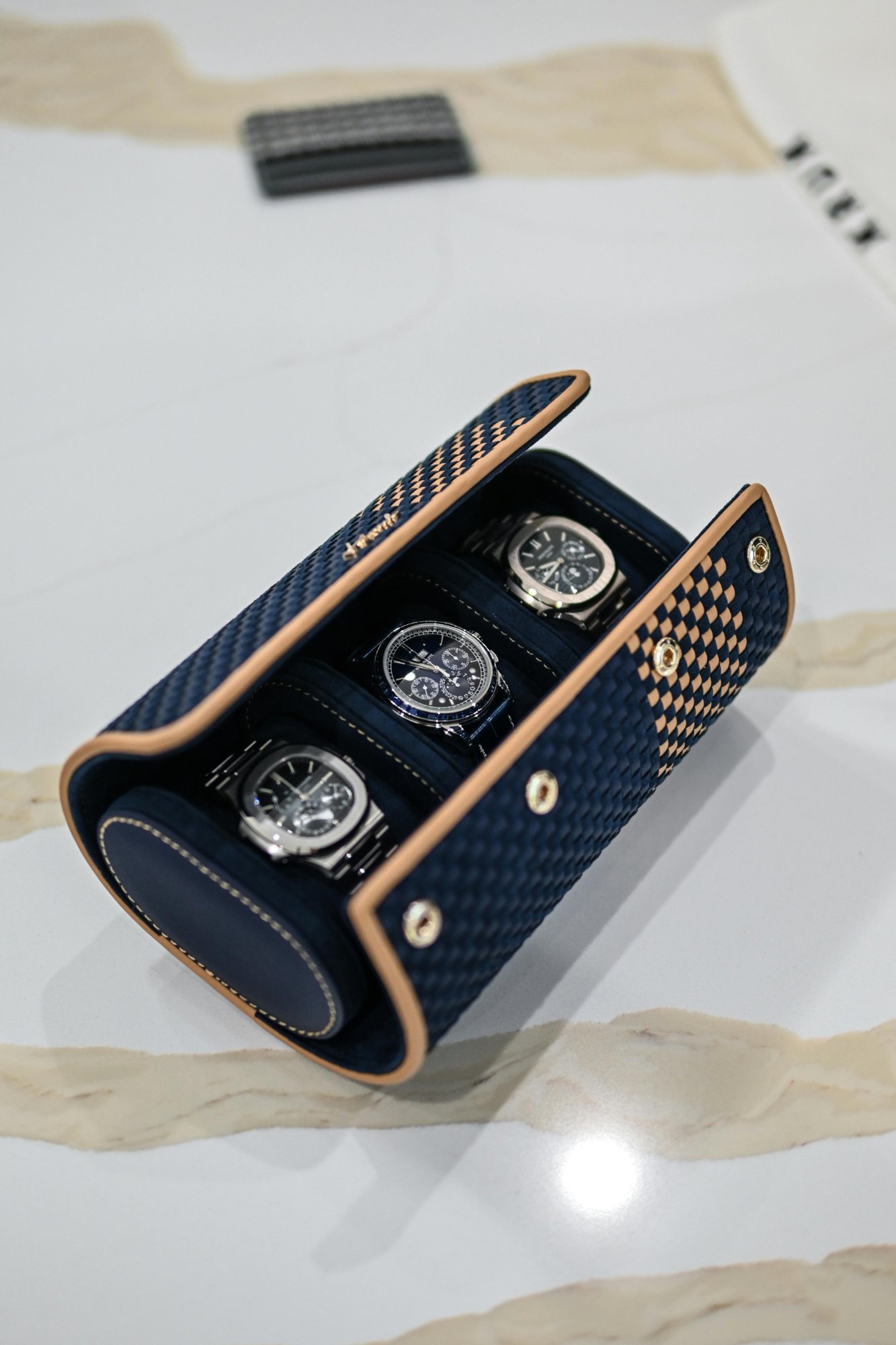
Most watch collections are not collections. They are accumulations — a series of purchases made sequentially, each justified in the moment, with no overarching thesis connecting them. The owner has a daily-wear diver, a dress watch acquired for a wedding, a sports chronograph bought during a moment of enthusiasm, and something vintage that seemed interesting at the time. None of them relates to the others. None reflects a developed point of view about watchmaking. The collection says nothing about the collector — and it will never be worth more than the sum of its parts, because it has no story.
The collections that achieve results at Phillips and Christie's — the ones that command the 8 to 12 percent premium over mixed-consignor catalogues that Christie's documented in its analysis of single-owner sales — were assembled by someone who knew what they were looking for, understood why it mattered, and built toward something. The collector's knowledge is embedded in the collection itself.
Establish a Point of View Before Making a Second Purchase

The single most important discipline in building a collection is deciding what you are interested in before the acquisition impulse takes over. Watch collecting has several coherent axes around which collections can be organised: by maker; by complication (perpetual calendars across different makers and eras, tourbillons, repeaters); by era (mid-century tool watches, 1970s integrated-bracelet watches, early independent production); by material (steel complications represent the rarest case material Patek Philippe used for mid-20th century complicated pieces); or by function. Any of these produces a coherent collection. The absence of any axis produces an accumulation. The collector who decides to focus on mid-20th century perpetual calendar wristwatches from Geneva will develop deep knowledge of that specific market: which references exist, which makers achieved them, which examples survive, what condition looks like for that era. That knowledge makes them a better buyer than anyone approaching the same auction catalogue without a thesis.
Buy the Best Example You Can Afford of Each Reference
Within any category, the difference in value between the best-condition and average-condition examples of a specific reference is larger than most new collectors anticipate — and the difference compounds over time. A Rolex Submariner reference 5512 from the early 1960s with all-original case, unpolished surfaces, correct glossy gilt dial, and complete documentation will command a premium of 100 to 300 percent over an equivalent reference with refinished case, replaced hands, and no papers. Both watches are the same reference. One is the reference as it was made; the other is a restored version of it. Serious collectors buy the former. The practical rule: buy one exceptional example rather than two average ones. The budget for two average pieces, redeployed into one excellent piece, produces a collection that is simultaneously smaller, more interesting, more liquid, and more valuable.
Develop the Relationships Before You Need Them

Access to the best pieces — whether at auction or in private sale — comes to buyers who are known quantities to the people who hold them. The independent dealers who handle the most important vintage pieces are not primarily transactional — they sell to collectors they know, trust, and believe will care for the pieces appropriately. The auction specialists at Phillips, Sotheby's, and Christie's bring important consignments to buyers with demonstrated interest before they appear in published catalogues. Building these relationships requires genuine engagement with the collector community before purchasing from it: attending major watch fairs (Watches & Wonders Geneva for major brands; specialist events where independent makers present to collectors directly); visiting auction previews and engaging with specialists during preview periods; contributing to the published literature on specific references through forums and specialist publications.
Document Everything
A watch collection is only as valuable as its provenance documentation. Every purchase should be accompanied by: the purchase receipt or auction lot documentation; any service records from the period of ownership; photographs of the watch at the time of acquisition showing its condition; and — for vintage pieces — any historical documentation linking the watch to its original sale. This documentation does not change the watch. It makes the watch's story verifiable, which is what serious buyers and auction houses pay for. The 8 to 12 percent premium that Christie's documented for single-owner thematic sales reflects the value of coherent, documented provenance. It is the result of systematic documentation over the life of the collection.
Sources: Christie's Hong Kong: John Shaw Patek Philippe Collection analysis, 2025; Phillips in Association with Bacs & Russo: single-owner auction performance; WatchCharts secondary market pricing data; Watches & Wonders Geneva documentation. This article is editorial commentary only.